Remembering Bill: A Sailor, a Brother, and a Life Cut Short
My mother was pleasantly surprised when my brother Matt and I showed up at her new home on a Monday evening.
It wasn't an ordinary visit, and she soon realized something was wrong."What's wrong?" she asked.
I could barely get the words out."Bill is dead."
The cry that came from my mother is something I will never forget.
It was February 1996. My brother Bill had died in an automobile accident in Sasebo, Japan. He was only 36 years old.
The Navy had tried to reach my mother, but she had recently moved and didn't yet have a telephone installed. Instead, Bill's wife, Taeko, called me. Her English was limited, and she struggled to explain what had happened. After speaking with her, I drove about 75 minutes to pick up our brother Matt. Together, we went to tell our mother the news in person.
There are some moments in life that remain with you forever. That Monday evening is one of them.
Brothers
Bill and I were just 15 months apart. We grew up together and were very close. In 1977, he left home to join the United States Navy. I was still young, and although I was proud of him, his departure marked the beginning of a different kind of relationship between us.
In those days, staying in touch wasn't as easy as it is today. There were no text messages, video calls, or instant communication. Distance really was distance. Over time, we drifted apart somewhat, although he never stopped being my brother.
Bill would occasionally send long letters home. He had opportunities to see parts of the world I will probably never see. His Navy travels took him to Hawaii, Guam, the Philippines, Australia, and Japan.
Through those letters, I got little glimpses of a world far beyond the one I knew.
I remember him mentioning one of the stranger traditions of Navy life.
When a sailor crossed the equator for the first time, he was known as a "Pollywog." After completing the traditional ceremony, he became a "Shellback." Bill mentioned that he was no longer a Pollywog. He didn't go into much detail. Growing up in our household, there were certain subjects we simply didn't discuss!
Even now, that little detail makes me smile.
Nineteen Years of Service
Bill made the Navy his career. He served for nineteen years as a Damage Control Technician aboard ships, spending considerable time on aircraft carriers in the Western Pacific.
He served aboard the USS Kitty Hawk during the period of the Iran Hostage Crisis and spent nine months in the Persian Gulf.
Damage Control Technicians have an important responsibility aboard a ship. They are trained to respond to fires, flooding, structural damage, and other emergencies. Their work helps protect the ship and the sailors who serve aboard her.
Bill's service sometimes extended beyond protecting his ship and fellow sailors. During an emergency in Sasebo, Japan, he rescued three Japanese civilian workers from a ship. His actions were recognized by the Japanese government, which presented him with an award.
I wish I remembered more of the circumstances surrounding that incident. I do remember that a story about his rescue appeared in a Washington, Pennsylvania newspaper. I would love to find that article again.
Whatever the precise circumstances, three people were alive because
Bill stepped forward to help. That is something worth remembering.
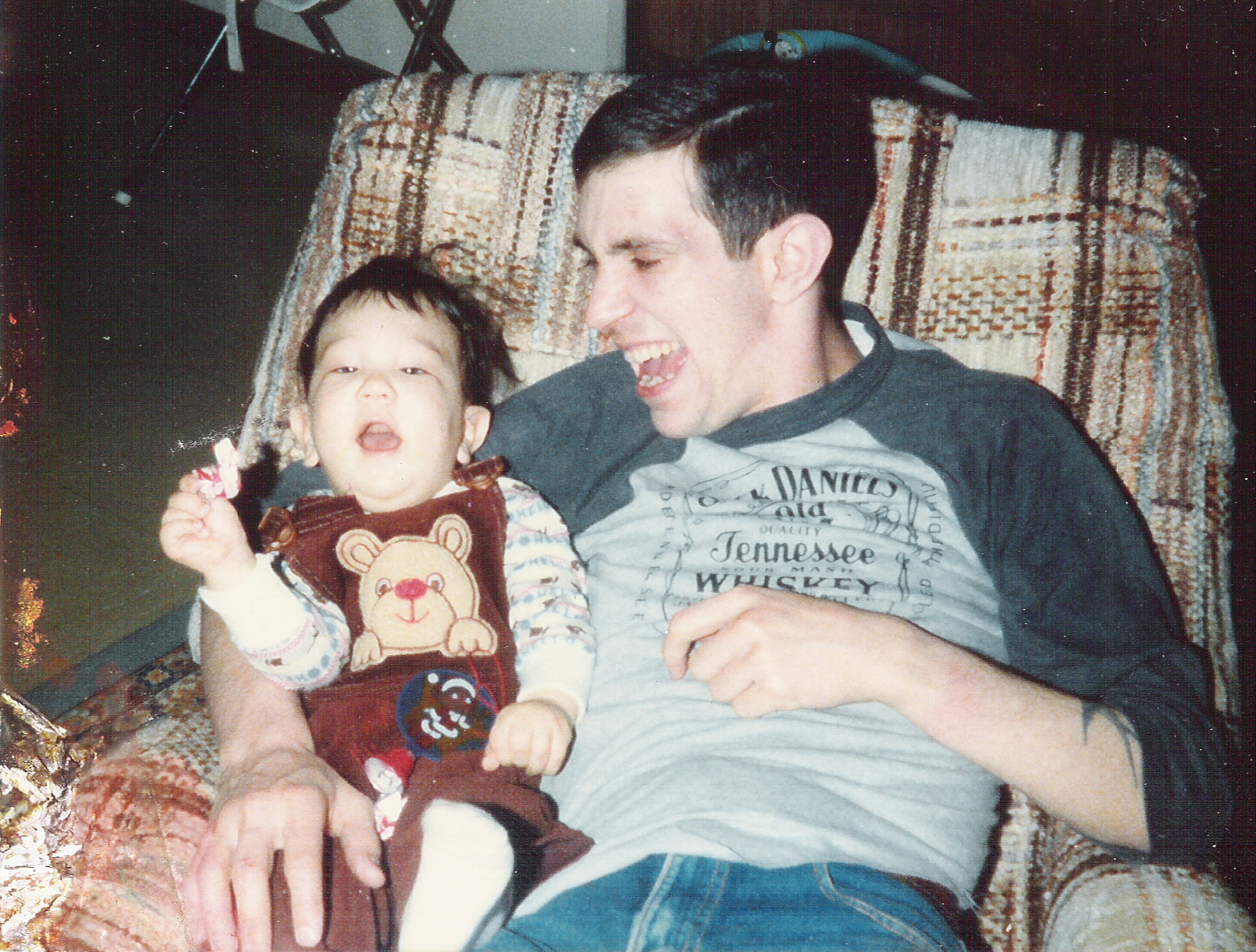
A Family of His Own
Bill married Taeko, a Japanese woman. He and Taeko had two children, a son, Bill, and a daughter, Erica.
The family spent considerable time in San Diego. At one point, as they prepared to return to Japan, Bill and Taeko arranged for the children to stay with our mother for a couple of weeks while they closed up their house.
As sometimes happens with family arrangements, a couple of weeks turned into several months. Mom even enrolled the children in elementary school. Eventually, the family moved to Japan during that school year.
Mom had the opportunity to spend some wonderful time with her grandchildren, and Bill and Taeko continued building their life in Japan.
Bill had plans to return to San Diego eventually. He hoped to join the Fire Department and teach specialized firefighting techniques for working in confined spaces. After nineteen years in the Navy, he was looking forward to another chapter in his life.
He never got that opportunity.
A Sailor Comes Home
When Bill died, the Navy held a memorial service aboard his ship. His body was then returned home to Pennsylvania.
It took a full week for him to make that journey. He arrived home on Presidents' Day, February 19, 1996.Taeko and their two young children made the trip to be with our mother and the rest of the family. We gathered for a funeral service to remember Bill and say our goodbyes.
His death brought together people whose lives had been separated by oceans and years. His shipmates had lost one of their own. His wife had lost her husband. His children had lost their father. My mother had lost her son.
And his brothers had lost their brother.
The Years That Followed
Bill's children have grown up and established lives of their own. His son followed a path of military service, making a career in the United States Air Force and attaining the rank of Master Sergeant. His daughter, Erica, worked as a flight attendant for several years and later became an entrepreneur with her husband, with wine cafés in New York City and Chicago.
I have remained in contact with both of them. It means a great deal to me that the connection with Bill's children has continued.
There is something particularly meaningful about seeing his son make a career in the Air Force after his father devoted nineteen years to the Navy. Their paths were different, but both included a commitment to serving their country.
Bill's life was cut short, but his story did not end with his death. His children have continued writing their own stories.
The Empty Places
My own life has taken a road I could never have imagined when Bill and I were growing up.
I am now a Roman Catholic permanent deacon. On Sunday mornings, I sit in the chair next to the presider and serve at the altar.
Sometimes, as I look out into the congregation, I find myself wondering what it would be like if Bill were there.
I see families sitting together. I see sons and daughters coming home in military uniforms and attending Mass with their parents. I see grandparents surrounded by their grandchildren.
I wonder what it would have been like to see Bill's son come home from the Air Force in uniform and sit with his father at Mass. I wonder what it would have been like to see Erica bring her children to church and have their grandfather there to share those moments.
Those are ordinary family experiences, but they are also extraordinary gifts. Bill never got to experience them.
Sometimes I wish he could have been there.
Remembering
Veterans Day gives us an opportunity to recognize the men and women who have served our country. We rightly honor their sacrifice, their commitment, and their willingness to answer the call to serve.
But behind every uniform is a person. A son, a daughter, a brother, a sister, a husband, a wife, a father, or a mother.
Every veteran has a story that extends far beyond the years of military service.
As Thanksgiving approaches, I find myself thinking about the people who won't be gathered around our tables. Some have been gone for many years. Yet their presence remains woven into our family stories and memories.
I am grateful for the years I had with my brother Bill. I am grateful for those long letters from distant places, for the memories of our childhood, and for the opportunity to remain connected to his children.
I wish we had more time. I wish I could hear one more story about his travels or ask him about his plans for San Diego. I wish I could see him sitting in a pew someday, watching his children and grandchildren, while I serve at the altar.
But we don't get to choose how long we have with the people we love.
We do get to remember them.
And sometimes, remembering is one of the ways we give thanks.
Fair winds and following seas, Bill.
Your brother remembers.
Following Truth Wherever He Leads
Love you, brother. Miss you, too!