03Aug

Years ago, I searched high and low for Sen-Sen. My father always carried a little pack in the pocket of his suit coat, and as a boy I loved them. Eventually they disappeared from store shelves. I bought boxes of them whenever I found them, knowing they wouldn't last forever. 

Today they're gone, but the memories remain.

Looking back, I realize I was searching for more than candy. I was trying to reconnect with a time and a person I loved.

Looking at an old family photo triggered a memory of something else I have been searching for. A hymn. Actually, a recording of that hymn. A hymn I heard for the first time as a child.  Isn’t it funny how our senses work. We see a picture, we remember a particular taste, and then a sound.

For me, that progression led me to a precious memory. That old black and white photo got me thinking about what we might have been doing back then. My siblings and I are clearly dressed in our Sunday best. It’s 8:15, I’m guessing in the morning, because at that age we’d have been in bed if it was evening. There must have been some important occasion that my parents wanted to memorialize.

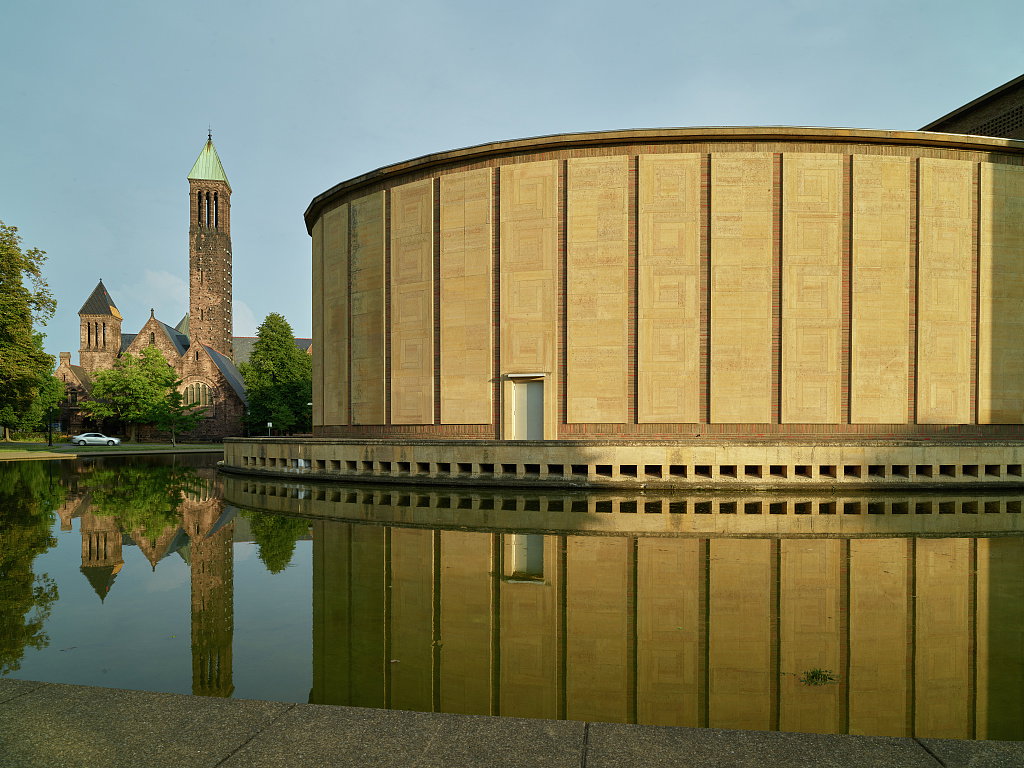
Once a month, we traveled from Greenville, Pennsylvania, to Buffalo, New York, where Apostle John W. Fendt conducted District Services at Kleinhans Music Hall. Congregations from across the district gathered there, and the combined district choir filled that magnificent hall with music unlike anything I'd ever heard.

Before the service began, the choir would sing. There were no microphones, no praise band, no stage lighting – just dozens of well-trained voices, accompanied by a magnificent pipe organ, filling Kleinhans Music Hall with harmonies that seemed to come from every direction.
One of the songs the choir sang was composed particularly for this kind of choir. In 1922, Carrie B. Adams composed a choral anthem based on Psalm 125. I found and purchased a copy of The Choir Herald where it first appeared.

Each time I hear the words of that Psalm, I am taken back to hearing the New Apostolic Church Buffalo District Choir sing, They That Trust In The Lord. Particularly the section of the song where the choir stops and a trio of voices begins.

The full choir stops; a trio steps out from the choir and up to a single microphone. The organ plays and two women and a man begin: 

“I was glad when they said unto me, let us go into the house of the Lord.” 

The voices blend as one. 

The harmony flawless. 

The timing impeccable. 

When the full choir resumes, they sing powerfully, 

“Let the people praise thee, praise thee oh God!”

I can still remember how the final chord resounded in that hall and in my soul. 

I can still hear it now. 

I searched for years for a recording of that song. 

I eventually found a recording on YouTube.

The video was grainy, the sound was poor, and the choir... well, let's just say they weren't the NAC Buffalo District Choir. I listened anyway. Not because it matched my memory, but because it reminded me that some things are too deeply woven into our lives to be recaptured by a recording.

As a younger man, I searched for an obsolete breath mint. 

Years later, I searched for an old hymn.

One could never be found again. 

The other, I discovered, had never really been lost. The words of Psalm 125 are still with me, and so is the trust in God they planted in the heart of a little boy. 

Following Truth Wherever He Leads


A "Wink of Providence"

I have been working on another book, One Tin Soldier. While working on a genealogy, I discovered so many mysteries about my ancestors, that it led to me creating a work of historical fiction. As I wrote this post, I received one of those unexpected ‘winks of Providence.’ I learned that Kleinhans Music Hall had been designed by a pair of Finnish architects. Eliel and Eero Saarinen. Father and son. As someone who would eventually come to appreciate his own Finnish heritage, that discovery made this memory even sweeter.


27Jul

It must have been sometime in the 1960s. I don't remember exactly what year. I just remember that it was summer, it was Sunday morning, and my dad was scheduled to preach in Pittsburgh. 

We lived in Greenville, Pennsylvania, and Pittsburgh was a smaller congregation than ours. My dad was a minister in the New Apostolic Church, and people seemed to love him everywhere he went. 

I asked if I could go with him. He said yes. 

I'd made the trip with him before, and I knew part of the routine. 

We would leave early Sunday morning and stop at a diner in Pittsburgh for breakfast before going to church. 

This was before the interstate highway system through western Pennsylvania was finished. We'd drive about twenty miles from home before getting onto I-80, then pick up I-79 heading toward Pittsburgh. Eventually the interstate simply ended on the north side of the city, near the turnpike. 

You knew you were getting close to Pittsburgh before you actually got there. You could smell it. And then you could see the smog. That was Pittsburgh in those days. 

The church wasn't some grand building with stained-glass windows and a steeple. It was a rented storefront that served the small congregation there. 

But before church came breakfast. The diner was the kind that seemed to be everywhere back then. Dad and I would sit at the counter. He'd order a soft-boiled egg, toast and coffee. I'd get one of those little single-serving boxes of cereal. I knew the routine. 


Except that Sunday, we never made it inside. We had parked and were walking across the parking lot toward the diner when a man approached my dad. “Hey, mister, can you spare a dime?” 

Dad reached into his pocket. He didn't give him a dime. He pulled out a couple of dollar bills and handed them to the man. Then Dad turned around and started walking back toward the car. I followed him. We got in. 

I couldn't understand what was happening. 

“Why are we leaving?” 

Dad told me that the man needed our breakfast money more than we did. 

Now, I was a little boy. And apparently my face betrayed the obvious problem with my father's generosity. 

If we had just given away our breakfast money, what exactly were we going to eat? 

Before I could ask, Dad said: “The Lord will provide.” 

And off we went to church. 

We arrived just as Sunday School was ending. One of the teachers was a German woman everyone called Oma D. That morning, one of her students was celebrating a birthday. And Oma D. had brought apple kuchen for everyone. Including us. 

I don't remember what my dad preached about that Sunday. 

I don't remember the hymns we sang. 

I don't remember the name of the man in the parking lot. I don't know where he went after my father handed him those couple of dollars. 

But more than half a century later, I remember the breakfast we didn't eat. 

And I remember the apple kuchen we did. 

Yesterday morning, I was sitting in another diner, this time with my wife. On the wall beside us was an artist's drawing of a 1958 Chevy Impala. 

My dad had one when I was a boy. One glance at that drawing opened a door I hadn't walked through in years. 

Suddenly I was remembering that enormous front bench seat, the dashboard, and what it felt like to be a little boy riding beside my father. 

I've been going through old family photographs ever since. I started out looking for a car. Instead, I kept finding Dad. 

And perhaps that is why this old Sunday morning in Pittsburgh came back to me. 

This weekend's Gospel tells us that the Kingdom of Heaven is like treasure buried in a field. A man discovers it and realizes that what he has found is worth more than everything else he owns. 

I've spent the last couple of days thinking about how much treasure can be buried in an ordinary life. 

When I was that little boy riding to Pittsburgh, I didn't know I was making a memory. 

I was just going somewhere with Dad. 

I didn't know that watching him hand our breakfast money to a stranger would stay with me for the rest of my life. 

I certainly didn't know that someday I would become a deacon and find myself preaching about treasures hidden in fields. 

And I don't think Dad was trying to teach me a lesson that morning. 

That's what makes the memory precious. He simply saw someone who needed what he had, reached into his pocket, and gave it to him. Then he trusted God with what came next. 

The apple kuchen makes a wonderful ending to the story. And I can still smile when I think about the timing of it. 

But the older I get, the more I realize that the kuchen wasn't the treasure. 

The treasure was sitting beside me in that car. 

My father couldn't have known what would be waiting for us when we got to church. He didn't give that man our breakfast money because he expected God to replace it. He gave it because, at that moment, he believed it was the right thing to do. 

And then he trusted God with what came next. 

More than fifty years later, I think that's what following God so often looks like. 

We don't get to see the whole road. 

We don't always know where it leads. 

Sometimes we simply recognize what is true, what is good, what Christ is asking of us in that moment - and we follow. 

I started looking through old photographs this weekend because I wanted to find a picture of a 1958 Chevy Impala. 

Instead, I found myself remembering a Sunday morning in Pittsburgh, a hungry stranger, a couple of dollar bills, a breakfast we never ate, and a piece of apple kuchen I can still almost taste. 

I was just a little boy going for a ride with his dad. 

I didn't know I was watching someone follow the Lord wherever He led. 

I just knew Dad said we'd be all right. 

“The Lord will provide.” 

And He did.


Following Truth Wherever He Leads

14Jul

When the road takes an unexpected turn, God is still there with us.

Forty years ago this summer, Janis and I were eagerly awaiting the birth of our first child. I was working as a printing press operator in the in-house print shop at Joy Manufacturing Company, a manufacturer of coal mining equipment. 

I had been there for seven years. It was a good job – steady work, excellent benefits, and the kind of security every young husband and father-to-be hopes for. 

Most of my co-workers were about my age. We were all at different stages of life – some married, some single – but we shared one thing in common: we were practicing Christians. 

The conversations we had during coffee breaks and lunch often revolved around our families, our churches, and our hopes for the future. 

That sense of stability began to unravel in the summer of 1986. Joy Manufacturing was a publicly traded corporation and had become the target of a hostile corporate takeover. 

As the battle for control intensified, rumors spread throughout the plant. Then the layoffs began. Week after week, employees were called into the office and escorted out. The company was desperately trying to cut costs in an effort to avoid the takeover. 

With a baby due in just a few weeks, every announcement left me wondering if I would be next. I had been keeping this fear secret from my wife. I rationalized it as making sure she didn’t worry.


Then my Friday came. 

My supervisor asked me to report to the manager's office. The Human Resources director was already there. 

"You're being laid off." After seven years, everything I owned at work fit into a cardboard box that had once held 250 No. 10 envelopes. 

As I sat in the binding room waiting for my shift to end, I thought about how I was going to tell Janis. 

My supervisor, Becky and I were working on stuffing some envelopes when I saw the Plant Manager, Bill O’Rourke walk pass the door. 

Not long afterward, he came back and this time entered the room.

"Mark, your wife is waiting for you in the lobby.” 

I got up and followed him to the lobby where Janis was waiting, her face all smiles even though the day was scorching hot and she was eight months pregnant. 

Bill stopped and said to Janis, “It was a pleasure meeting you.” 

Then he went up the steps quickly to his office. 

"I have some news," she said. 

"Me too." 

As we walked to the car, I could feel the eyes from inside watching us. Or at least I imagined I could. I had been watching every Friday afternoon for weeks. 

In the car she went first. 

"The doctor says the baby will probably be here within ten days!" 

I burst into tears. 

"What happened?" she asked. 

"I no longer have a job." 

The drive home was filled with more tears than words. 

The following Monday, I returned to work to begin my notice period. My manager had my résumé professionally typeset and printed. 

Later that day, Bill O'Rourke stopped by the print shop. He expressed his sorrow over what had happened, encouraged me to use him as a professional reference, and reminded me that good people sometimes find themselves on the losing end of circumstances beyond their control. It wasn't a long conversation, but I've never forgotten it.

Looking back, I've realized two things. 

First, God was already opening doors I couldn't yet see. What felt like the end of the road became the beginning of a new chapter in our lives. 

Second, I wasn't protecting my wife by carrying my fears alone. Marriage was never meant to work that way. 

God gives husbands and wives one another so they can carry life's burdens together. 

For nearly forty years, Bill never knew how much that brief conversation meant to me. 

Forty years later, I reached out to him to send him a note, telling him how much his kindness meant to me. After exchanging a few emails, Janis and I shared lunch with him just last month. 

We talked about where our journeys had taken us. 

He left Joy not long afterward and went on to a distinguished career at Alcoa, eventually becoming a nationally recognized speaker and co-author of The Business Ethics Field Guide. 

Seeing where life had taken both of us made our reunion all the more meaningful.

Sometimes God provides exactly what we need - not by changing our circumstances immediately, but by placing the right people along our path at just the right time. 

That cardboard box wasn't the end of my story. 


It was simply another bend along the winding road.


Following Truth Wherever He Leads.